



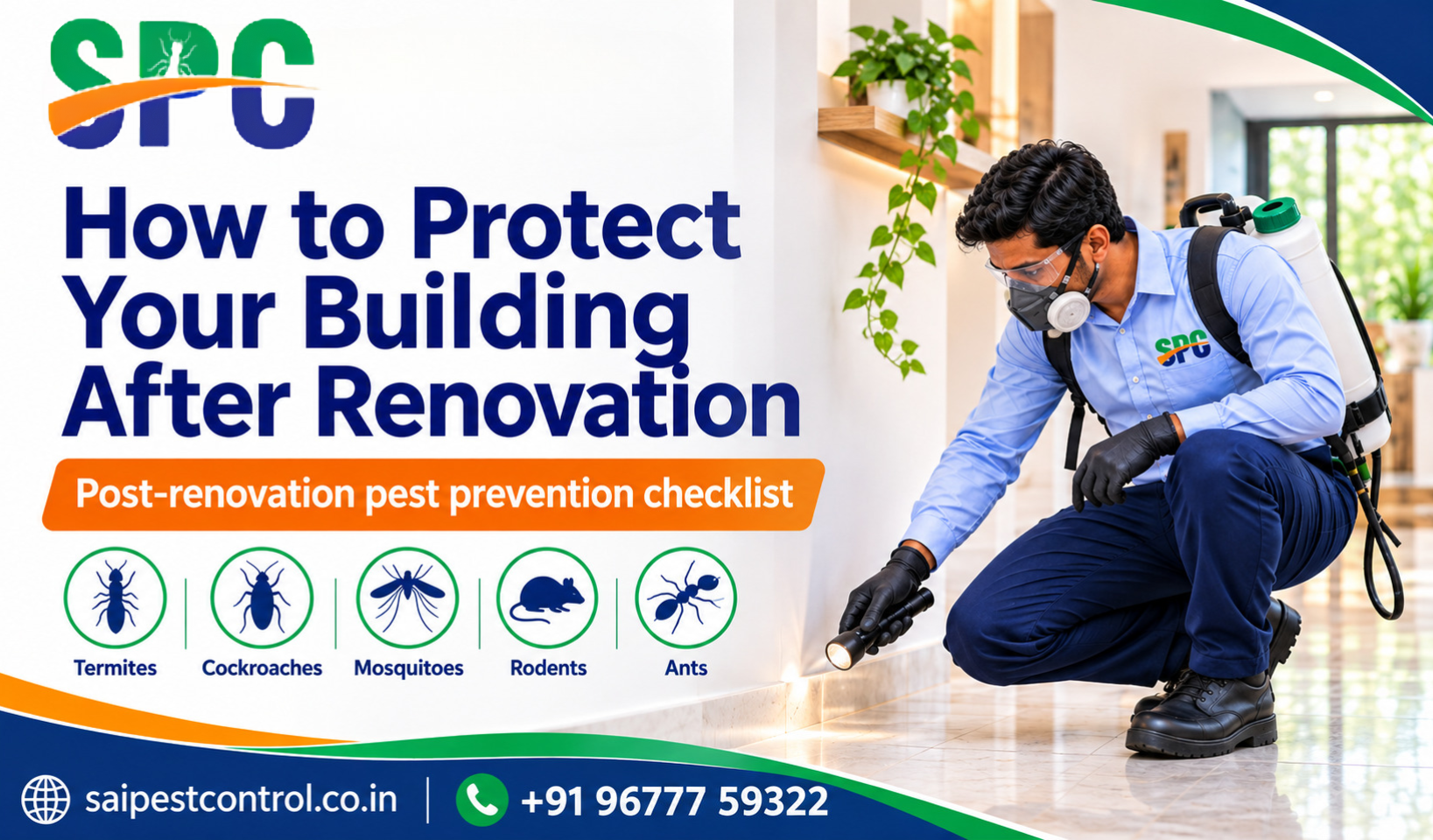
Post-Construction Termite Treatment: How to Protect Your Building After Renovation
Post Construction Termite Treatment is essential for protecting buildings after renovation. While renovation improves the appearance and functionality of a property, it does not always eliminate hidden termite infestations. Termites can silently damage wooden doors, windows, furniture, and other building components. Professional termite treatment helps eliminate existing infestations and protects your property against future termite attacks.
This is where Post Construction Termite Treatment becomes essential. It helps eliminate existing termite infestations and creates protective barriers to reduce the risk of future termite attacks. Whether you have renovated a residential property, office, or commercial building, proper termite protection helps maintain its strength and durability.
What Is Post Construction Termite Treatment?
Post Construction Termite Treatment is a professional pest control process carried out after a building has been constructed or renovated. It involves inspecting the property, identifying termite activity, and applying suitable termite control solutions to affected and vulnerable areas.
Unlike pre-construction treatment, which is performed before or during construction, post-construction treatment focuses on protecting existing structures. Special attention is given to foundations, wall-floor joints, wooden structures, plumbing entry points, and other areas where termites may enter.
Why Is Termite Treatment Important After Renovation?
Renovation work can sometimes create new openings and expose vulnerable areas that termites may use to enter a building.
Here are some important reasons to consider termite treatment after renovation:
1. Protect Wooden Structures
Termites feed on cellulose found in wood and other materials. Doors, windows, cupboards, wooden flooring, and furniture can become easy targets without proper protection.
2. Prevent Hidden Structural Damage
Subterranean termites can travel through soil and concealed spaces to reach buildings. They may cause damage without showing visible signs initially.
3. Protect Your Renovation Investment
Renovation involves considerable time and money. Professional termite treatment helps protect your newly renovated interiors and reduces the possibility of expensive repairs.
4. Eliminate Existing Termite Infestations
If termites were already present before renovation, professional treatment can help address the infestation and reduce the risk of further spread.
Common Signs of Termite Infestation After Renovation
Identifying termite activity early can help prevent serious damage. Watch for these warning signs:
- Mud tubes on walls: Small mud tunnels along walls, foundations, or corners.
- Hollow-sounding wood: Wooden doors, furniture, or frames producing hollow sounds when tapped.
- Damaged wooden surfaces: Peeling paint, blistering surfaces, or weakened wooden structures.
- Discarded termite wings: Small transparent wings near windows, doors, and light sources.
- Fine wood particles: Unusual debris or signs of damaged wooden materials.
If you notice any of these signs, arrange a professional termite inspection.
Effective Methods for Post Construction Termite Treatment
Professional pest control technicians select treatment methods based on the building's condition and the level of infestation.
1. Chemical Barrier Treatment
Suitable termiticides are applied to targeted soil and structural areas to create a protective barrier against termite entry.
2. Drill and Injection Treatment
In appropriate situations, technicians create small access points in selected areas and inject termite control solutions into concealed spaces or vulnerable sections.
3. Wooden Structure Treatment
Wooden doors, furniture, frames, and other vulnerable components may receive suitable anti-termite treatment.
4. Targeted Termite Control
When termite activity is detected in specific locations, localized treatment helps address affected areas without unnecessarily treating the entire property.
All treatments should be performed by trained professionals using approved products and following the manufacturer's safety instructions.
How to Prevent Termites After Renovation
Apart from professional treatment, a few preventive measures can help protect your property:
- Repair water leaks and avoid excessive moisture around walls and floors.
- Keep wooden materials away from direct soil contact.
- Maintain proper drainage around the building.
- Seal unnecessary gaps and cracks where appropriate.
- Avoid storing cardboard, paper, and unused wooden materials in damp areas.
- Schedule periodic termite inspections.
- Contact pest control professionals immediately when you notice termite activity.
Why Choose Professional Termite Control Services?
DIY termite solutions may provide temporary relief, but they often fail to address hidden infestations. Professional technicians have the experience and equipment to identify termite entry points and select suitable treatment methods.
Professional termite control offers:
- Detailed property inspection.
- Treatment solutions based on infestation levels.
- Protection for vulnerable structural areas.
- Safe and systematic application methods.
- Preventive recommendations and follow-up support.
Frequently Asked Questions (FAQs)
1. What is post construction termite treatment?
It is a professional termite control process performed after a building is constructed or renovated to eliminate existing termites and help prevent future infestations.
2. Is termite treatment necessary after renovation?
Yes. Renovation may expose vulnerable areas and create new entry points. An inspection helps determine whether additional termite protection is required.
3. How long does post-construction termite treatment take?
The duration depends on the building size, infestation level, and treatment method. A professional inspection helps determine the estimated completion time.
4. Is post construction termite treatment safe for homes?
Professional treatment can be carried out with appropriate safety precautions. Occupants should follow the technician's instructions regarding ventilation, re-entry, children, and pets.
5. Can termites return after treatment?
Yes, termites can re-enter a property if new entry points or favourable conditions develop. Regular inspections, moisture control, and appropriate preventive measures help reduce this risk.
6. When should I schedule termite treatment after renovation?
It is best to arrange an inspection after major renovation work, particularly when flooring, wooden structures, foundations, or plumbing areas have been disturbed.
Conclusion
Protecting your building from termites should not end when renovation work is completed. Proper Post Construction Termite Treatment helps safeguard wooden structures, prevent hidden damage, and maintain the long-term value of your property.
If you are looking for reliable and professional termite control solutions, Sai Pest Control is here to help. We provide professional termite inspection and treatment solutions for residential, commercial, and industrial properties across Tamil Nadu.
Our experienced technicians assess termite activity and recommend suitable treatment methods to protect your property effectively.
Don't wait until termites cause expensive damage. Contact Sai Pest Control today to book your termite inspection and protect your newly renovated building with professional pest control solutions.
Comments are closed