



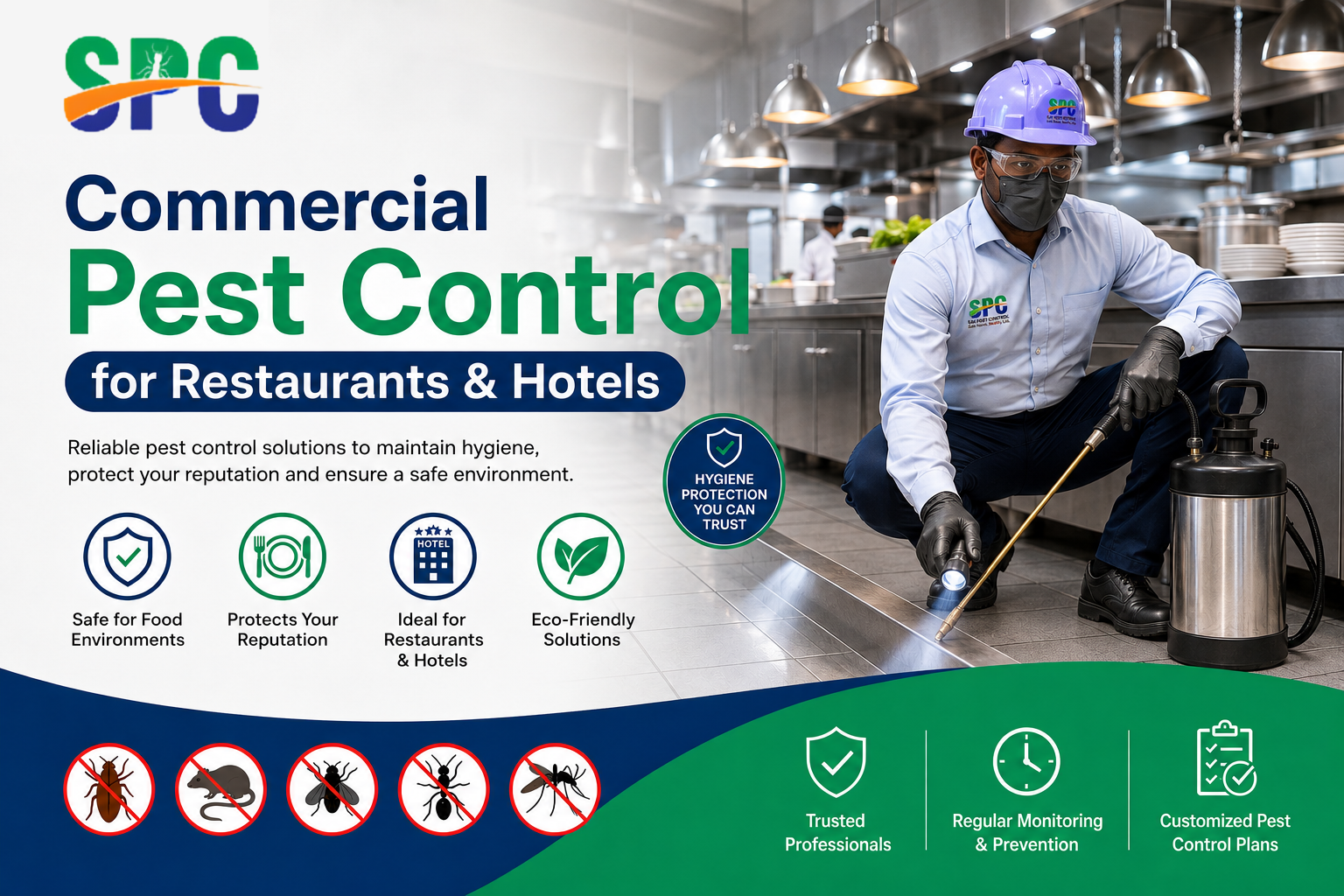
Why Routine Commercial Pest Control Is Essential for Restaurants and Hotels
In the hospitality industry, guests remember more than delicious meals and comfortable rooms. Cleanliness, hygiene, safety, and the overall experience strongly influence customer satisfaction and repeat business. A single pest sighting in a dining area, guest room, or kitchen can quickly damage years of hard-earned trust.
In today's digital environment, online reviews can influence where customers choose to eat, stay, and spend their money. Because of this, maintaining a pest-free environment is no longer simply a maintenance task. It is an important part of running a successful hospitality business.
Regular commercial pest control helps restaurants and hotels prevent infestations before they become serious problems. Instead of waiting until pests become visible, businesses can take proactive steps to protect guests, employees, food supplies, equipment, and property.
A planned pest management program can also support hygiene practices, reduce operational risks, and help businesses maintain a professional reputation.
Why Hospitality Businesses Attract Pests
Restaurants and hotels naturally provide many of the conditions pests need to survive. Food preparation areas, storage rooms, waste disposal zones, moisture, water sources, and warm indoor environments can all attract insects and rodents.
Even businesses with excellent cleaning routines can experience pest activity. Pests may enter through delivery areas, drainage systems, doors, windows, utility openings, cracks, or surrounding outdoor areas.
Early detection is important. Routine commercial pest inspections can help identify signs of pest activity before an infestation spreads throughout kitchens, storage rooms, guest areas, or other parts of the property.
Customer Trust Depends on Cleanliness
Guests expect restaurants and hotels to maintain high standards of cleanliness and hygiene. Discovering a cockroach near a dining table, noticing insects in a kitchen, or finding signs of rodents in a hotel can immediately create concerns about cleanliness and food safety.
Customer experiences can also reach social media and review platforms within minutes. A negative review mentioning pests may influence potential customers before they ever visit the property.
Routine pest management demonstrates that a business takes hygiene and customer comfort seriously. Maintaining a clean and pest-free environment can help protect brand reputation and encourage positive guest experiences.
Protecting Food from Pest Contamination
Food businesses must take appropriate precautions to protect ingredients and prepared food from contamination. Pests can carry microorganisms and contaminants into areas where food is prepared, stored, or served.
Cockroaches can move across contaminated surfaces before entering food preparation areas. Flies can transfer contaminants from waste areas to food-contact surfaces, while rodents may damage packaging and leave droppings or urine around stored products.
A professional commercial pest control program helps identify pest risks and introduces suitable preventive measures to reduce the possibility of contamination.
Supporting Food Safety and Hygiene Standards
Restaurants and hotels must maintain appropriate hygiene and food safety practices. Pest activity can create serious concerns during internal inspections or visits from relevant authorities.
Regular pest control supports a structured approach through scheduled inspections, monitoring, preventive treatments, and documented pest management activities.
Maintaining records of inspections and treatments can also help demonstrate that pest prevention is being handled as part of the property's wider hygiene management process.
Preventing Pest-Related Property Damage
Pest problems are not always limited to food contamination. Some pests can cause expensive structural or equipment damage while remaining hidden from view.
Rodents may chew electrical wiring, insulation, packaging materials, and other components. This can increase maintenance expenses and potentially create safety concerns.
Termites can also cause damage to wooden furniture, doors, storage structures, fixtures, and other timber components. When termite damage becomes visible, the underlying problem may already be extensive.
Routine inspections can help businesses identify early warning signs and address pest activity before the damage becomes more costly.
Creating a Comfortable Experience for Hotel and Restaurant Guests
Hospitality businesses compete on customer experience. Comfortable rooms, clean dining areas, professional service, and hygienic surroundings all contribute to how customers perceive a brand.
Guests do not expect to encounter insects in hotel rooms or pests around restaurants. Even an isolated incident can negatively influence how customers view the entire property.
Routine commercial pest control helps create a cleaner environment where guests can dine, stay, relax, and recommend the business with greater confidence.
Protecting Food Inventory and Reducing Waste
Restaurants purchase significant quantities of ingredients and food products. A pest infestation can contaminate or destroy valuable inventory, creating unnecessary waste and increasing operating costs.
Dry goods, grains, spices, packaged food, fruits, vegetables, and other stored products may be vulnerable when storage areas are not properly monitored.
Commercial pest management can include inspections of storage areas along with recommendations for improving sanitation, storage practices, access control, and pest prevention.
Improving Workplace Health and Safety
A pest-free workplace benefits employees as well as customers. Kitchen staff, housekeeping teams, maintenance workers, and other employees perform their responsibilities more effectively in clean and hygienic surroundings.
Reducing pest activity can help minimize workplace concerns, protect food preparation areas, and create a more professional working environment.
When employees can work in a clean and well-maintained environment, businesses are better positioned to deliver consistent service to their customers.
Why Preventive Pest Control Is Better Than Emergency Treatment
Many businesses contact pest control professionals only after noticing visible insects, rodents, or property damage. However, visible activity may indicate that pests have already established themselves somewhere on the property.
Preventive commercial pest control focuses on identifying potential risks before they develop into major infestations. Scheduled inspections, monitoring, targeted treatments, sanitation recommendations, and exclusion measures can provide a more proactive approach.
- Helps identify pest activity at an early stage
- Reduces the possibility of major infestations
- Helps protect food and stored inventory
- Supports a cleaner and more hygienic workplace
- Helps reduce unexpected pest-related disruptions
- Can help control long-term maintenance and treatment costs
Choosing the Right Commercial Pest Control Partner
Restaurants and hotels should work with a pest control provider that understands the specific requirements of commercial hospitality properties.
A professional pest management service should ideally provide detailed inspections, suitable treatment recommendations, safe application methods, regular monitoring, and practical advice for reducing future pest risks.
The right approach is not simply about eliminating visible pests. Effective commercial pest management focuses on identifying why pests are entering or surviving on the property and implementing measures that support long-term prevention.
What to Look for in a Commercial Pest Control Service
- Experience with restaurants, hotels, and commercial properties
- Detailed inspection and pest identification
- Customized pest management plans
- Regular monitoring and follow-up visits
- Professional treatment methods
- Clear service documentation and recommendations
Need Reliable Commercial Pest Control?
Protect your restaurant, hotel, food storage areas, employees, guests, and business reputation with a proactive commercial pest management approach.
Contact Sai Pest ControlFrequently Asked Questions About Commercial Pest Control
Why do restaurants need regular pest control?
Restaurants handle food, waste, water, and storage materials that can attract pests. Regular commercial pest control helps identify pest activity early and supports a cleaner, safer food-service environment.
How often should a hotel have pest control?
The appropriate frequency depends on the property's size, location, pest risks, food handling activities, previous pest activity, and environmental conditions. A professional inspection can help determine a suitable pest management schedule.
Can pest control help protect restaurant food?
Yes. A professional pest management program can help identify pest entry points, monitor activity, and reduce the risk of insects and rodents accessing food preparation and storage areas.
Why is preventive pest control better than emergency treatment?
Preventive pest control focuses on identifying and addressing risks before they develop into larger infestations. This can help reduce disruptions, protect property and inventory, and support consistent hygiene practices.
What pests commonly affect restaurants and hotels?
Common commercial pest concerns can include cockroaches, rodents, flies, ants, stored-product pests, termites, and other insects. The exact pest risk depends on the property's environment and operating conditions.
Conclusion
Restaurants and hotels operate in an industry where customer confidence depends heavily on cleanliness, hygiene, safety, and service quality. Routine commercial pest control should therefore be treated as an important part of ongoing property management.
By taking a preventive approach, hospitality businesses can help protect food supplies, reduce pest-related property damage, support hygiene practices, improve workplace conditions, and provide guests with a more comfortable experience.
Investing in professional pest management is not simply about removing pests after they appear. It is about identifying risks early, preventing recurring problems, protecting the business's reputation, and creating an environment where customers and employees can feel confident.
Related topics: commercial pest control, restaurant pest control, hotel pest control, pest control for restaurants, pest management services, commercial pest management, cockroach control, rodent control, termite control, food safety pest control.
Comments are closed