



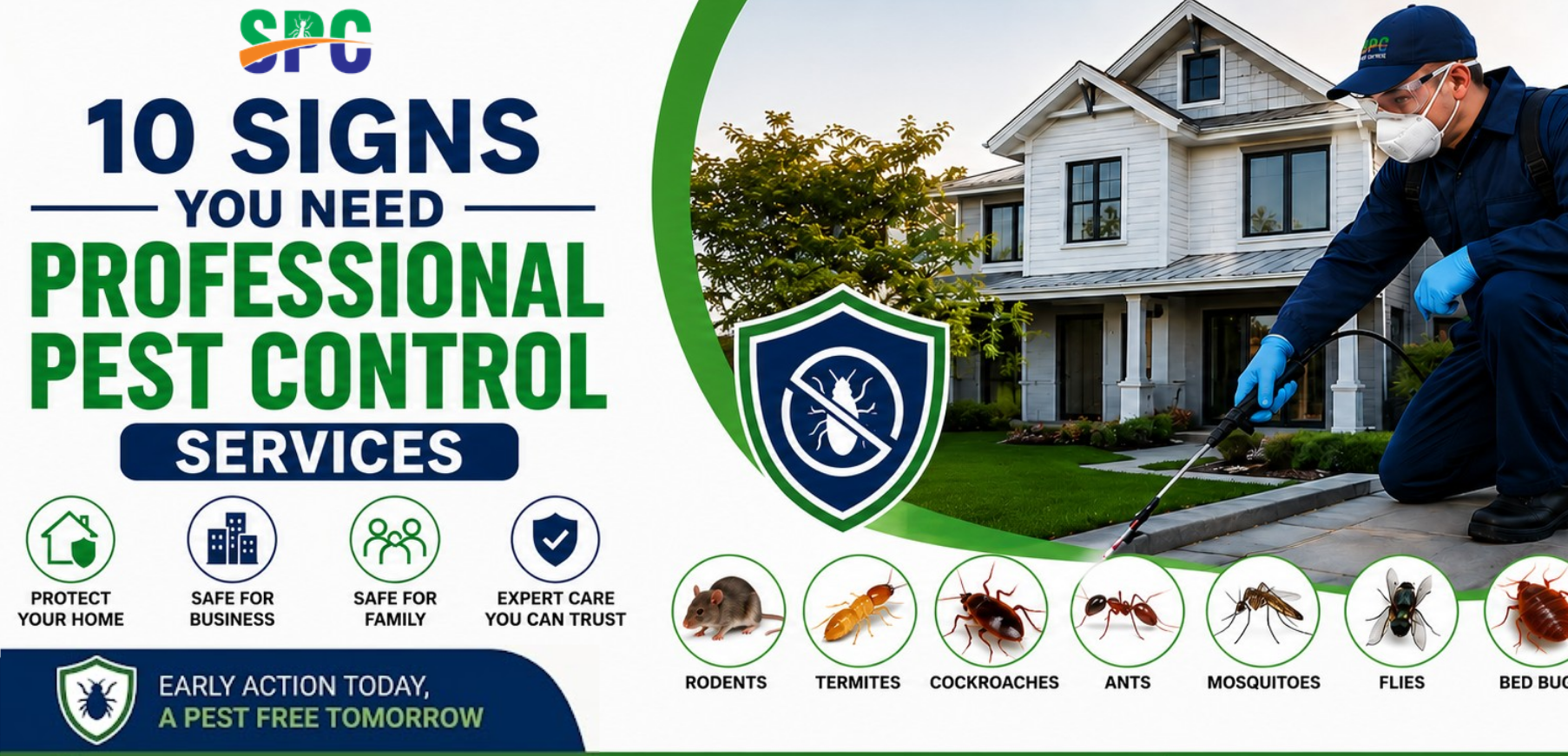
Pests rarely become a serious problem overnight. In most cases, an infestation starts with a few unnoticed insects, rodents, termites, mosquitoes, or bed bugs and gradually becomes more difficult to control. Knowing the early warning signs can help you take action before pests cause property damage, hygiene concerns, or disruption to your home or business.
If you are wondering when to call professional pest control services, the following 10 signs should not be ignored.
You Keep Seeing Pests Regularly
Spotting a few insects occasionally doesn't necessarily indicate a serious pest problem. However, repeated sightings of cockroaches, ants, mosquitoes, rats, termites, flies, or bed bugs can indicate an underlying pest problem. If pests continue appearing even after cleaning or using household products, the source may be hidden behind walls, under furniture, or in other hard-to-reach spots.
You Find Pest Droppings or Waste
Pest droppings are one of the easiest infestation signs to identify. Rodent droppings may appear around kitchens, storerooms, cupboards, warehouses, and food-storage areas, while cockroaches leave small dark marks. Finding droppings repeatedly suggests pests are actively using the area rather than just passing through.
You Notice Unusual or Bad Odours
An unexplained unpleasant smell can indicate pest activity — urine, droppings, nesting materials, or food remains left behind by rodents and cockroaches. If cleaning doesn't remove the smell, a professional inspection is worthwhile, especially in kitchens, warehouses, and other hygiene-critical spaces.
You Discover Gnaw Marks or Property Damage
Rodents chew packaging, furniture, insulation, wood, and wiring, while termites attack wooden structures long before visible damage appears. Watch for:
- Chewed electrical wires
- Gnaw marks on furniture
- Damaged cartons or packaging
- Holes in walls or wooden materials
- Damaged doors and frames
- Termite mud tubes or damaged wood
You Notice Unusual Noises or Activity After Dark
Scratching, squeaking, or scurrying from ceilings, walls, or cupboards can point to rodents or other pests moving through hidden areas. Since many pests are nocturnal, don't dismiss strange nighttime sounds — a professional inspection can locate entry points and nesting areas.
You Notice Termite Droppings or Hollow-Sounding Wood
Termites can cause significant damage to wooden components over time. Warning signs include discarded wings near windows and doors, and mud tubes around walls, foundations, or wooden structures. Act quickly with professional termite control to determine the extent of the problem.
DIY Pest Control Isn't Working
Sprays, traps, and store-bought products often provide only temporary relief. Killing visible cockroaches doesn't eliminate hidden harbourage areas, and killing a few ants doesn't remove the colony. Professional pest management focuses on the source, not just the symptoms.
You Notice Repeated Mosquito or Fly Activity
A growing number of mosquitoes or flies can signal favourable breeding conditions — standing water, drains, waste areas, food residue, or moisture. Professional mosquito and fly control services identify breeding areas and build a suitable management plan.
Customers, Employees, or Family Members Are Complaining
Pest problems quickly affect confidence in a property. Complaints from customers, employees, or family members mean it's time to take the issue seriously — for businesses, this can affect hygiene standards, reputation, and daily operations.
You Keep Getting the Same Pest Problem
Perhaps the biggest warning sign is recurrence. If pests keep returning after cleaning or DIY treatment, there's likely an unresolved source. A professional company can inspect the property, identify entry points, and recommend lasting preventive measures.
Why Choose Professional Pest Control?
Professional pest control is not simply about spraying chemicals. Effective pest management involves understanding the pest species, inspecting the affected property, identifying activity areas, selecting suitable treatment methods, and providing preventive recommendations.
Sai Pest Control provides customized pest-control solutions for residential, food processing, pharmaceutical, healthcare, warehousing, and hospitality industries — including termite, fly, mosquito, and bed bug management.
With professional support, you can address pest problems systematically instead of repeatedly treating only the visible symptoms.
Address Pest Issues Early — Before They Spread
Droppings, unusual odours, property damage, termite signs, repeated sightings, strange sounds, and recurring infestations are all reasons to consider professional pest control — for your home or business.
Get a Free Pest Inspection
Comments are closed