



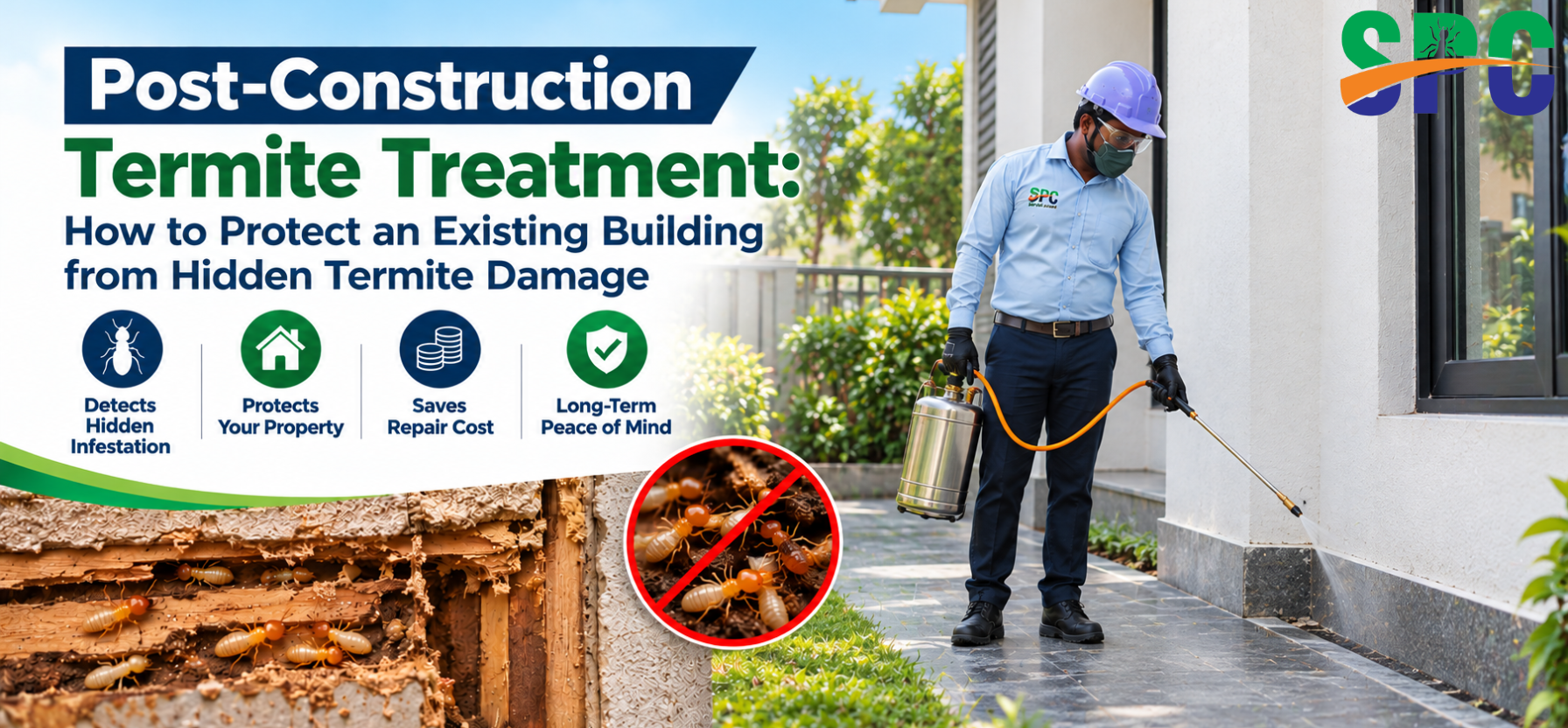
Post-Construction Termite Treatment: How to Protect an Existing Building from Hidden Termite Damage
Post-construction termite treatment helps protect existing buildings from hidden termite damage. Termites can hide behind walls, under flooring, inside wooden fixtures, and near damp areas, making early detection difficult.
For homes, offices, shops, warehouses, and other completed properties, post-construction termite treatment is used when termite activity appears after the building has already been constructed.
Acting early can help limit damage to wooden materials and prevent the infestation from reaching additional parts of the property.
When Termites Find Their Way Into a Finished Building
Construction being complete does not prevent termites from entering later.
Very small openings around pipes, floor edges, wall joints, foundation areas, and utility sections may become pathways. Dampness can also make certain parts of the property more attractive to termite activity.
Once inside, termites usually travel through concealed spaces instead of remaining on exposed surfaces.
As a result, the location where damage is noticed may be different from the original entry point.
Where Hidden Termite Movement Can Take Place
Termites need only a narrow gap to continue moving through a structure.
They may pass through cracks near flooring, spaces around plumbing lines, wall junctions, foundation gaps, or timber that stays in contact with damp surfaces.
Mud-like trails can sometimes indicate termite movement. However, those trails may only show part of the route.
A cupboard, door frame, or wooden panel can therefore show damage even when termites entered from another section of the building.
Small Warning Signs Inside the Property
Changes in wood should be examined when they appear without an obvious reason.
A hollow sound when tapping a wooden panel, weakening door frames, small holes, mud marks, damaged wood layers, or discarded wings can indicate termite presence.
Some affected timber keeps its outer shape even after the inner portion has been damaged.
Spotting unusual changes at an earlier stage can make it easier to identify where termite activity is occurring.
How Treatment Is Chosen for an Existing Structure
A post-construction termite treatment should be based on the conditions found at the site.
Technicians may inspect wooden fittings, plumbing areas, floor joints, wall edges, storage sections, damp corners, and other locations where termite movement is suspected.
Treatment can then be applied to selected areas according to the infestation pattern.
The purpose is to address the sections connected with termite activity rather than simply treating one visible patch and assuming the problem has ended.
For additional information about pest management practices, refer to the Extension Guidelines for Pest and Rodent Management published by NIRDPR.
Why Visible Termites Tell Only Part of the Story
Seeing and killing a few termites does not always mean the infestation has stopped.
Additional termites may remain inside timber, behind wall finishes, below flooring, or in underground passages.
A household spray may affect insects that are exposed at that moment but may not reach the concealed areas supporting continued movement.
Professional termite control therefore requires attention to both visible damage and the less obvious locations around it.
Moisture, Stored Materials and Other Details to Recheck Later
Conditions around the property can still influence termite activity after treatment.
Correct water seepage, leaking pipes, wet corners, and moisture near ground-level walls instead of leaving them unattended.
Unused wood, old cartons, paper bundles, and timber scraps should also be kept away from damp areas.
Cupboards, lofts, skirting, door frames, and storage spaces can be inspected occasionally for fresh mud marks, damaged wood, or other unusual changes.
Maintaining drier and cleaner surroundings reduces the number of favourable places where termites can remain unnoticed.
How Sai Pest Control Selects the Right Areas for Attention
Termite infestation does not look identical in every property.
Sai Pest Control provides post-construction termite treatment for residential, commercial, and industrial premises.
Before treatment is planned, the building can be assessed for visible activity, damaged materials, moisture, structural gaps, and suspected termite routes.
The treatment can then be directed towards the parts of the property that require attention.
Addressing termite activity before it spreads further can help protect wooden fixtures and reduce avoidable repair work.
Frequently Asked Questions
Can termites be treated without rebuilding the property?
Yes. Many termite problems can be treated by working on selected affected areas without rebuilding the complete structure.
Why is termite activity sometimes discovered very late?
Termites spend much of their time inside concealed areas such as timber, walls, floors, and underground passages. Visible evidence can therefore take time to appear.
Can leaking water increase the chance of termite activity?
Long-lasting moisture can create favourable conditions. Repairing leaks and reducing dampness can make affected areas less suitable for termites.
Does killing the termites visible on a wall solve the entire problem?
Not necessarily. Hidden termite movement can continue in other parts of the property even when the visible insects are gone.
Which property changes may provide termites with another route inside?
New cracks, pipe leaks, damp sections, disturbed soil, exposed gaps, or wood placed close to wet surfaces can create additional access opportunities.
Comments are closed