



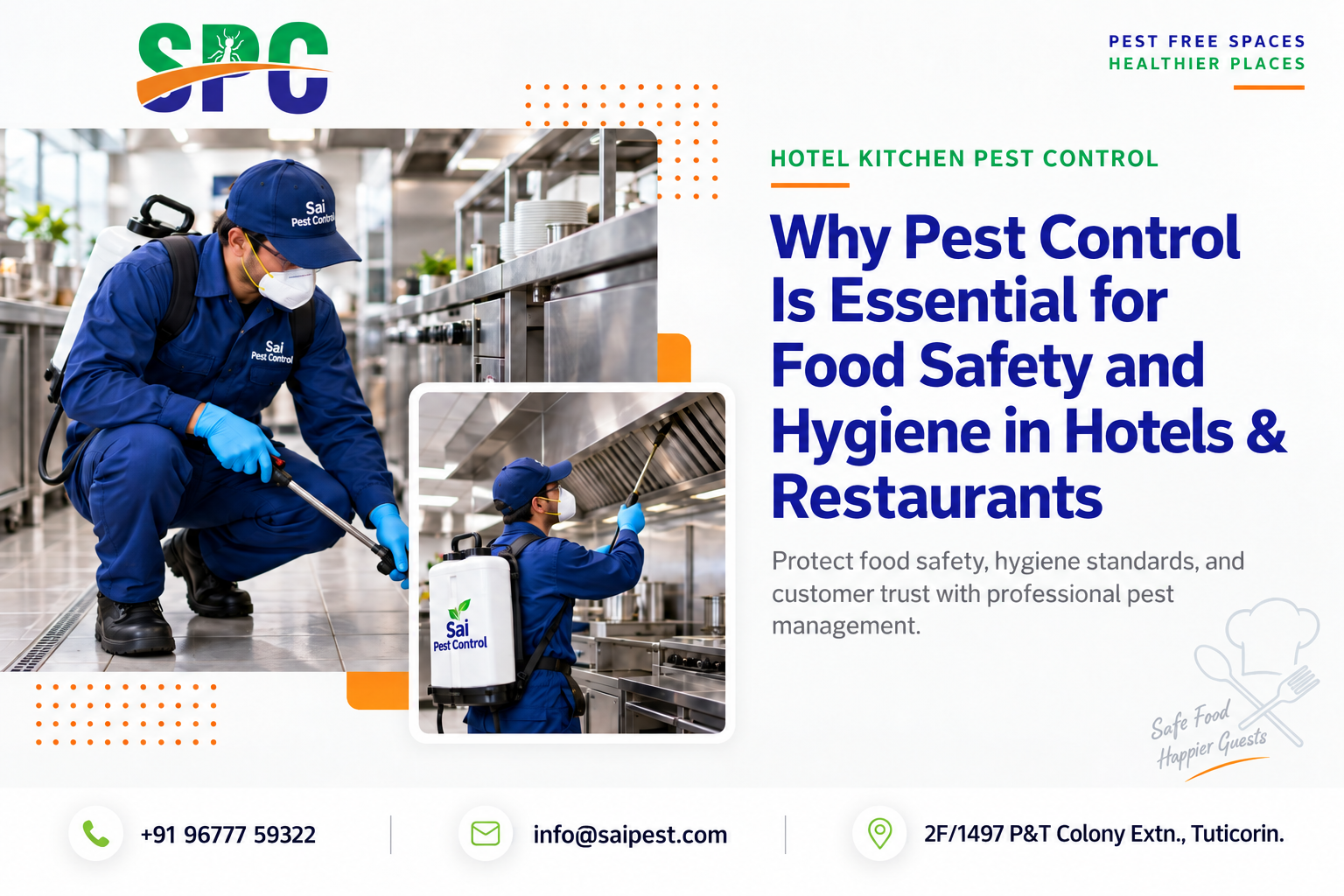
Why Pest Control Is Essential for Food Safety and Hygiene in Hotels & Restaurants
Hotel kitchen pest control is essential for maintaining food safety and hygiene in hotels and restaurants. Managing a commercial kitchen involves more than preparing delicious meals; it also requires keeping food preparation, storage, waste-handling, and surrounding areas clean, organised, and safe throughout the day.
Commercial kitchens handle ingredients, water, waste, packaging, and continuous food preparation, which can make them attractive to pests. Implementing a proper pest control programme helps reduce these risks. Regular monitoring and preventive treatments support food hygiene, protect stored ingredients, and create a safer environment for staff and guests.
How Do Pests Enter Commercial Kitchens?
Hotel and restaurant kitchens are highly active spaces. Deliveries arrive regularly, doors open frequently, and food is continuously prepared and stored. These daily activities can create opportunities for pests to enter.
Cockroaches may hide near drains, sinks, appliances, and warm equipment. Rodents can enter through small gaps around doors, pipes, walls, or storage areas. Flies are often attracted to organic waste, moisture, and uncovered food.
Even minor issues such as food residue under equipment or standing water near drains can encourage pest activity. Routine inspection is therefore an important part of kitchen maintenance.
Why Pest Control Matters for Food Safety
Pests in food preparation areas can create serious hygiene concerns. Cockroaches, flies, rats, and mice may move through waste areas, drains, and contaminated surfaces before reaching kitchen spaces.
If pests come into contact with food, utensils, storage areas, or preparation surfaces, they can increase the risk of contamination.
A well-planned hotel kitchen pest control programme helps identify early signs such as droppings, insect activity, damaged packaging, unusual odours, or possible pest entry points. Detecting these signs early can prevent a minor issue from becoming a larger infestation.
Clean Kitchens Need More Than Daily Cleaning
Daily cleaning is essential, but it may not completely prevent pest problems.
Pests can hide behind refrigerators, in cracks, under cooking equipment, around plumbing lines, and in hard-to-reach areas during normal cleaning.
Professional pest inspections focus on these hidden areas and identify conditions that may encourage pest activity.
Hotels and restaurants can improve prevention by sealing food containers, removing waste regularly, repairing water leaks, cleaning drains, and keeping storage spaces organised.
Combining proper housekeeping with professional pest management makes the kitchen less suitable for pests.
Protecting Your Business Reputation
Guests expect hotels and restaurants to maintain high standards of cleanliness.
Seeing a cockroach, fly, or rodent near a dining or food-service area can immediately affect customer confidence. A negative experience may also result in poor online reviews or social media complaints.
Preventive pest control therefore supports both hygiene and business reputation.
Maintaining a clean and pest-free kitchen helps customers and employees feel more confident about the quality and safety standards of the establishment.
Common Pests in Hotels and Restaurants
Different pests require different control approaches.
Cockroaches
Cockroaches prefer dark, warm, and damp locations such as drains, cabinets, and equipment gaps.
Rodents
Rodents often search for food and shelter in storage rooms, waste areas, ceilings, and spaces behind kitchen equipment. They may also damage food packaging and materials.
Flies
Flies are commonly attracted to drains, food waste, bins, and food preparation areas.
Ants
Ants can enter through tiny openings and quickly establish trails when they find food or moisture.
Identifying the type of pest present helps technicians select the appropriate treatment method.
The Importance of Preventive Pest Management
Waiting until pests become clearly visible can make treatment more difficult.
Preventive pest management focuses on identifying potential problems before they become severe. It may include routine inspections, pest monitoring, entry-point checks, drainage inspections, waste-area monitoring, and targeted treatment where required.
Scheduled visits also allow pest-control technicians to observe recurring issues and recommend practical preventive measures.
This approach is particularly useful for hotels and restaurants because kitchen operations continue every day.
Supporting Food Safety and Hygiene Practices
Following recognised food-safety practices is also important. The World Health Organization recommends keeping food-preparation areas clean and protecting kitchens and food from insects, pests, and other animals as part of its Five Keys to Safer Food guidance.
Professional pest-control services can provide inspection reports, treatment records, monitoring details, and preventive recommendations.
Maintaining these records helps businesses manage pest control in a more organised manner instead of responding only when an infestation becomes visible.
Integrated Pest Management for Commercial Kitchens
Integrated Pest Management, or IPM, combines different prevention and control strategies rather than depending entirely on chemical treatments.
An IPM-based hotel kitchen pest control programme may include pest monitoring, sanitation improvements, sealing entry points, reducing moisture, proper waste handling, and targeted treatments.
The aim is to create kitchen conditions that are less attractive to pests while maintaining a safe food-handling environment.
Frequently Asked Questions
1. How often should pest control be done in a hotel kitchen?
The frequency depends on the kitchen size, pest risk, food-handling activities, and previous pest problems. Regular professional inspections can help determine a suitable schedule.
2. Which pests are commonly found in restaurant kitchens?
Cockroaches, rodents, flies, and ants are among the most common pests found around commercial kitchens, storage areas, drains, and waste-handling locations.
3. Is professional pest control necessary if the kitchen is cleaned daily?
Yes. Cleaning helps reduce food and waste sources, but pests may still hide in cracks, drains, equipment gaps, and other difficult-to-reach areas.
4. What is the best way to prevent pests in commercial kitchens?
Regular cleaning, proper food storage, waste management, leak repairs, entry-point sealing, routine inspections, and professional pest management can help reduce pest activity.
Conclusion
Pest management is an important part of maintaining food safety and hygiene in hotels and restaurants. A professional hotel kitchen pest control programme helps identify risks early, protect food preparation areas, improve cleanliness, and reduce the chances of unexpected infestations.
By combining proper cleaning, storage, waste management, regular inspections, and professional pest control, hospitality businesses can maintain a cleaner and safer kitchen environment.
Need Professional Pest Control for Your Hotel or Restaurant?
Protect your commercial kitchen with regular inspection, preventive pest management, and professional treatment from Sai Pest Control.
Commercial Pest Control Contact Sai Pest Control
Comments are closed