



Sai Pest Control Blog
FSSAI Compliance Failure Starts With Pests: Why Restaurants and Food Factories in India Are Losing Hygiene Rating
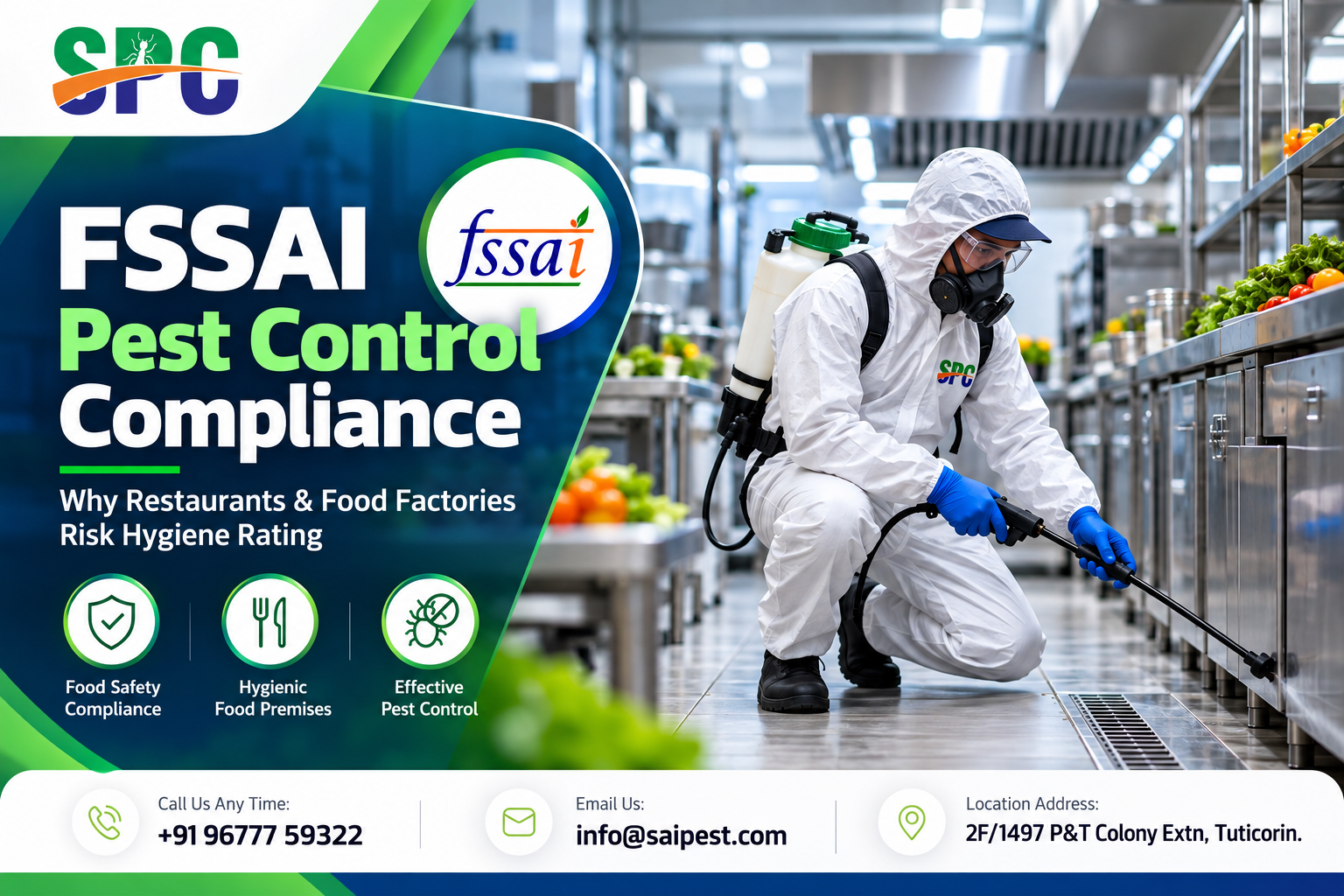
FSSAI Schedule 4 — Pest control by trained and experienced personnel is mandatory, and "NO SIGNS OF PEST ACTIVITY" is a 4-mark critical point in the Hygiene Rating Audit.
India, known for its love of food, is now under strict FSSAI watch. Recent inspections of Delhi hotels found multiple deficiencies, including pest activity, making one thing clear: An FSSAI license does not mean you are compliant every day.
As per FSSAI Schedule 4, every Food Business Operator must maintain:
- A documented Pest Control Program
- Pest control activities carried out by trained and experienced personnel – with proper records
- Zero signs of pest activity – eggs, larvae, faeces, flies, cockroaches, rodents or other evidence of infestation
- Properly maintained drains, grease and cockroach traps where required, sealed entry points, insect mesh and air curtains
Pests are not just a nuisance. Rats can contaminate food through urine, droppings and contact with food-storage areas. Flies can transfer pathogens from drains, waste areas and contaminated surfaces to ready-to-eat food.
For Food Packaging Material units in India, the risk is also serious. If a carton or pouch is contaminated in your warehouse, contamination can affect the food chain and the products packed inside.
Solution: Use only pest-control chemicals approved for their intended use by the competent authority, along with proper MSDS documentation, service reports and service-proof records or stickers. Pest-control treatment should be carried out only by trained and experienced personnel, because improper chemical application in food-handling areas can create a contamination risk.
How Do Pests Reach Your Plate?
You may be spending ₹500 on a meal at a restaurant, but have you ever checked whether there is a history of cockroach activity in the kitchen?
In the FSSAI Hygiene Rating Audit, pest control is an important food-safety requirement. "No signs of pest activity or infestation" is a 4-mark critical food-safety point, along with requirements for a documented pest-control programme and proper records.
If cockroaches, rats or flies are found in a kitchen, it can affect the Hygiene Rating. It may also lead to regulatory action depending on the seriousness of the non-compliance and public-health risk.
What problems can pests cause?
- Food Poisoning: Cockroaches can carry harmful bacteria such as Salmonella
- Infestation in Packaging: The food box or package you take home may be at risk of pest contamination or pest eggs
As a customer, what should you check?
- Is an FSSAI Hygiene Rating sticker displayed at the entrance?
- Are pest-control service charts or records available?
- Are the drains properly covered and maintained?
Even a restaurant that looks clean may not always be pest-free. Ask them – who manages your pest control?
Why Your Current Pest Control May Fail Your Next FSSAI Audit
Food Business Owner, if your pest control vendor gives you only a bill and a strong chemical smell after spraying, your pest-control system may not meet the documentation and food-safety expectations checked during an FSSAI audit.
Important pest-control records can include:
- Pest Control Contract or agreement with a qualified pest-control service provider
- Service Reports mentioning chemical name, dilution, area covered, treatment details and technician signature
- Chemical MSDS and applicable approval or registration documents – with no banned or unauthorised chemicals
- Site Map showing bait stations, insect light traps and other pest-control monitoring points
Additional records such as technician details, pest-sighting logs and treatment schedules may also be maintained depending on the facility and pest-control programme.
What We Do Differently at Sai Pest Control
- Gel baiting instead of unnecessary spraying in sensitive food zones – helps minimise chemical exposure and reduce contamination risk.
- Rodent bait stations with proper monitoring and numbered location maps – supporting organised pest-management documentation.
- Insect Light Traps with glue pads in suitable areas instead of inappropriate open electric zappers – helping prevent insect fragments from falling into food-handling or production areas.
Why Regular Pest Monitoring Matters
FSSAI pest control compliance should not be treated as a one-time activity before an inspection. Pest activity can develop due to food waste, moisture, drainage problems, poor storage and unsealed entry points.
Restaurants, food factories, bakeries and warehouses should regularly inspect drains, storage rooms, waste zones, loading areas and spaces under equipment. Early detection of droppings, damaged packaging, pest eggs or insect activity can help prevent larger infestations.
Frequently Asked Questions
1. Is pest control mandatory for restaurants under FSSAI?
Yes. Food businesses are expected to maintain effective pest-control measures, with activities carried out by trained and experienced personnel and supported by proper records.
2. What does FSSAI pest control compliance mean?
It means maintaining a structured pest-management programme that helps prevent infestation, controls pest-entry points and maintains suitable treatment and documentation practices.
3. Why is "No Signs of Pest Activity" important?
Visible pest activity indicates a food-safety risk. In the FSSAI Hygiene Rating checklist, "No signs of pest activity or infestation" is a critical requirement carrying 4 marks.
4. What pest-control records should a food business maintain?
Records may include pest-control contracts, service reports, MSDS documents, chemical details, monitoring maps, treatment schedules and pest-sighting records.
5. Can improper pest-control treatment contaminate food?
Yes. Incorrect chemical application near food, equipment or food-contact surfaces can create contamination risks. Treatments should therefore be carried out by trained professionals.
Conclusion
FSSAI pest control compliance is not only about passing an inspection. It helps protect food, customers and the reputation of a business.
Restaurants and food factories should maintain regular pest monitoring, preventive measures, proper sanitation and documentation. Working with trained pest-control professionals can help reduce infestation risks and keep businesses better prepared for FSSAI audits.
Comments are closed