



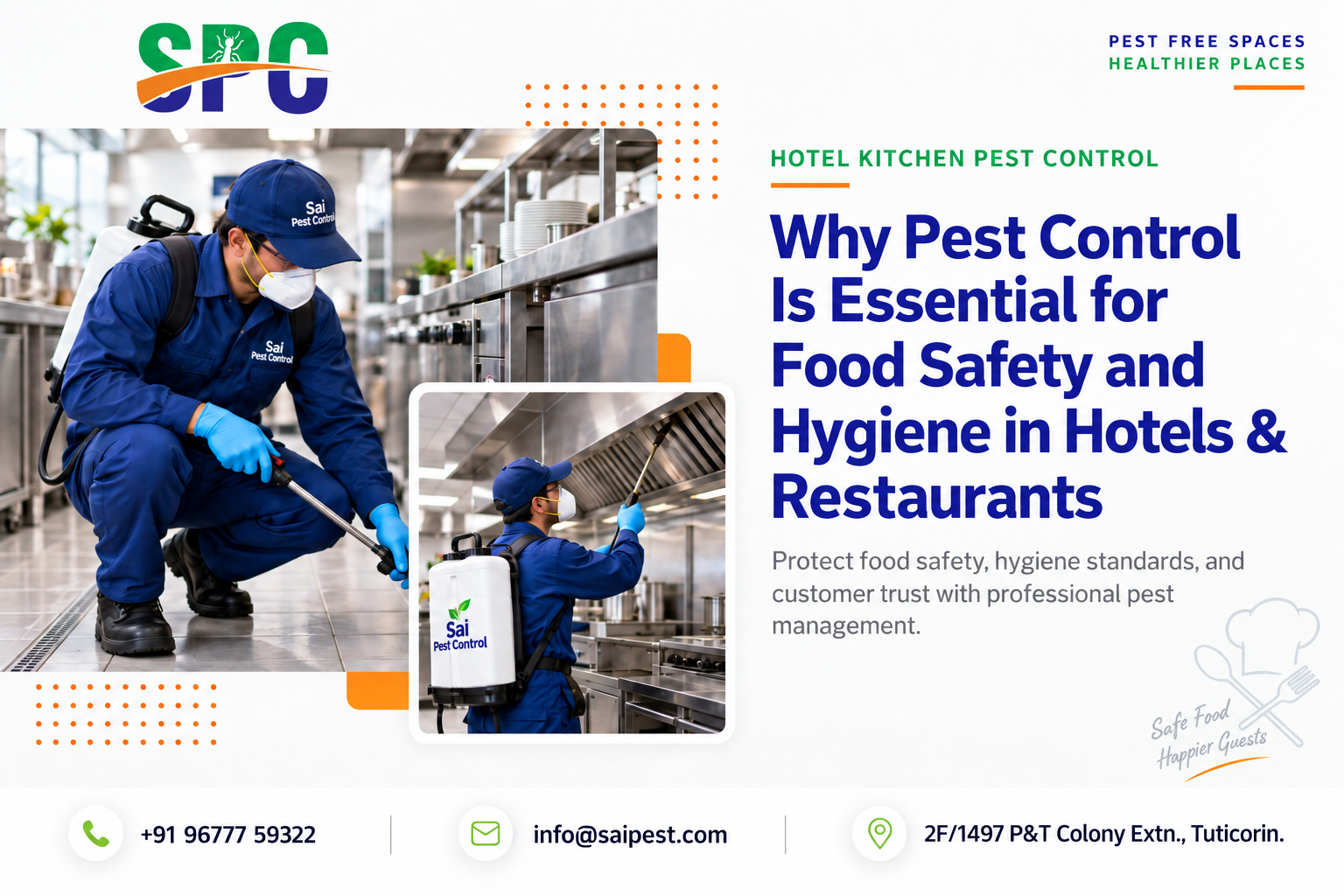
Hotel kitchen pest control is essential for food safety and hygiene in hotels and restaurants. A commercial kitchen does more than cook meals. It must also keep food, storage and waste areas clean and safe all day.
Commercial kitchens handle food, water, waste and packaging all day long. As a result, pests find them very attractive. A proper pest control programme lowers this risk. Also, regular checks and preventive treatments protect your stored food. They create a safer place for staff and guests.
How Do Pests Enter a Commercial Kitchen?
Hotel and restaurant kitchens are always busy. Deliveries arrive often, doors open again and again, and food is stored all day. For this reason, pests can easily get in.
Cockroaches hide near drains, sinks and warm equipment. Rodents, on the other hand, enter through small gaps around doors, pipes and walls. Flies come for waste, moisture and uncovered food.
Even small problems can invite pests. For example, food crumbs under equipment or water near drains can start an infestation. Therefore, routine checks are a key part of kitchen care.
Why Hotel Kitchen Pest Control Matters for Food Safety
Pests in food areas cause serious hygiene problems. Cockroaches, flies, rats and mice often move through waste areas and drains first. Then they reach your kitchen.
If a pest touches food, tools or work surfaces, it can spread germs. So the risk of contamination goes up. For more detail, read the World Health Organization food safety page.
A good hotel kitchen pest control programme spots early signs. These include droppings, insect activity, damaged packs, strange smells and entry points. As a result, you can stop a small problem before it becomes a big infestation.
Clean Kitchens Still Need Hotel Kitchen Pest Control
Daily cleaning is essential. However, it cannot stop every pest problem.
Pests hide behind fridges, inside cracks, under cooking equipment and around pipes. Normal cleaning rarely reaches these spots.
Professional inspections, on the other hand, focus on these hidden areas. They also find the conditions that attract pests.
You can help prevent pests too. For example, seal food containers, remove waste often, fix leaks, clean drains and keep stores tidy.
Together, good housekeeping and professional pest control make your kitchen a poor home for pests.
How Hotel Kitchen Pest Control Protects Your Reputation
Guests expect hotels and restaurants to be clean.
If a guest sees a cockroach, fly or rat near the dining area, trust drops fast. Moreover, a bad experience can lead to poor online reviews.
Therefore, preventive pest control supports both hygiene and your brand.
A pest-free kitchen also gives staff and customers more confidence in your standards.
Common Pests in Hotels and Restaurants
Each pest needs a different control method.
Cockroaches
Cockroaches like dark, warm and damp places. For example, they hide in drains, cabinets and equipment gaps.
Rodents
Rodents look for food and shelter in stores, waste areas and ceilings. In addition, they damage food packs.
Flies
Flies are drawn to drains, food waste, bins and prep areas.
Ants
Ants enter through tiny gaps. Then they quickly form trails when they find food or moisture.
Therefore, knowing the pest helps technicians pick the right treatment.
The Importance of Preventive Pest Management
If you wait until pests are visible, treatment gets harder.
Preventive management finds problems early. It includes routine inspections, pest monitoring, entry-point checks, drain checks and targeted treatment when needed.
Moreover, scheduled visits let technicians spot repeat issues. They can then suggest practical fixes.
This approach suits hotels and restaurants well because kitchens work every day.
Supporting Food Safety and Hygiene Practices
Good food safety habits also matter. For instance, the World Health Organization's Five Keys to Safer Food advises you to keep food areas clean and protect food from insects and pests. In India, you can also follow the guidance on the FSSAI website.
Professional services give you inspection reports, treatment records, monitoring details and prevention tips.
As a result, you manage pests in an organised way. Otherwise, you only react after an infestation shows up.
Integrated Pest Management for Hotel Kitchen Pest Control
Integrated Pest Management, or IPM, mixes several prevention and control methods. In other words, it does not rely only on chemicals.
An IPM-based hotel kitchen pest control programme may include monitoring, better sanitation, sealed entry points, less moisture, proper waste handling and targeted treatment.
The goal is simple. Make the kitchen less attractive to pests, but keep food handling safe.
Frequently Asked Questions
1. How often should hotel kitchen pest control be done?
It depends on kitchen size, pest risk, food activity and past problems. So regular professional inspections help set the right schedule.
2. Which pests are common in restaurant kitchens?
Cockroaches, rodents, flies and ants are the most common. They are often found near kitchens, stores, drains and waste areas.
3. Is professional pest control needed if the kitchen is cleaned daily?
Yes. Cleaning cuts down food and waste sources. However, pests can still hide in cracks, drains and equipment gaps.
4. What is the best hotel kitchen pest control method?
A mix works best. For example, combine regular cleaning, proper storage, waste control, leak repairs, sealed entry points and routine inspections with professional pest management.
Conclusion: Why Hotel Kitchen Pest Control Pays Off
Pest management is a key part of food safety in hotels and restaurants. A professional hotel kitchen pest control programme finds risks early. It also protects food areas and lowers the chance of sudden infestations.
So combine good cleaning, storage, waste control, regular inspections and professional pest control. Finally, you get a cleaner and safer kitchen.
Need Professional Pest Control for Your Hotel or Restaurant?
Protect your commercial kitchen with regular inspection, preventive pest management and professional treatment from Sai Pest Control.
Commercial Pest Control Contact Sai Pest Control
Comments are closed