



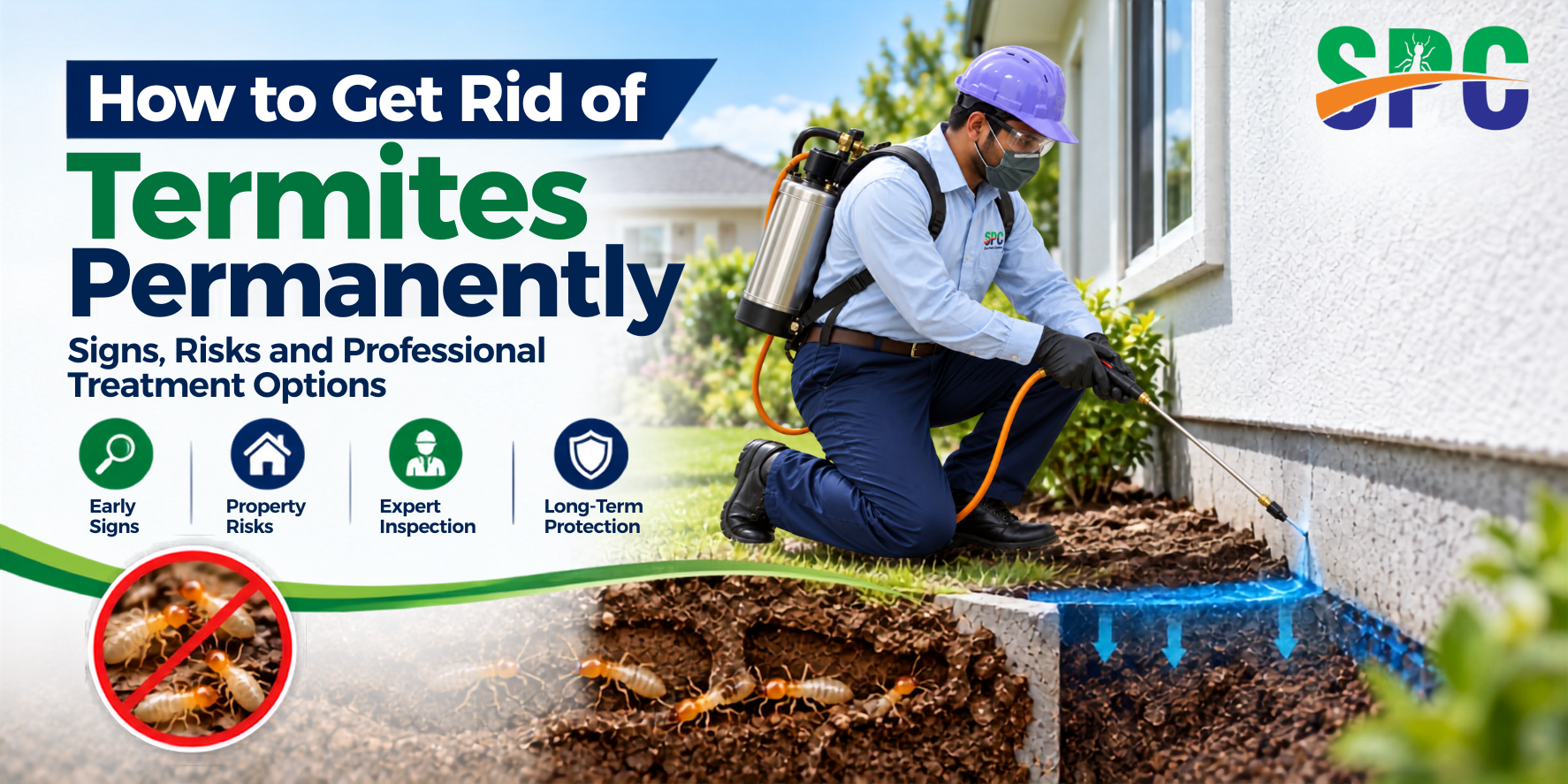
How to Get Rid of Termites Permanently: Signs, Risks and Professional Treatment Options
Termites can quietly affect a property for a long period before their presence becomes obvious. They may remain inside timber, below flooring, around foundations, or within other protected areas. Since most of their activity occurs out of view, visible damage may appear only after the problem has been developing for some time.
A cupboard that becomes unusually weak, a door frame that starts deteriorating, or small wings appearing near a window can all be reasons to investigate further.
If you are searching for how to get rid of termites permanently in Tamil Nadu, understanding termite behaviour and selecting a treatment based on the actual property are important parts of effective control.
Cellulose Is the Main Attraction
Termites require cellulose as a food source. Wood contains plenty of it, which makes wooden parts of a building particularly attractive.
Furniture, cupboards, doors, frames, flooring, partitions, cardboard boxes, paper products, and stored timber may all provide feeding opportunities.
Moisture can also influence which areas become favourable. Leaking plumbing, damp soil, water seepage, and poorly ventilated spaces can create conditions that deserve attention.
Termites may travel through soil or concealed sections before reaching a food source. The place where damage becomes visible may therefore be different from their original entry point.
Subtle Indicators Around the House
A termite problem may first appear through small changes in the condition of wooden materials.
Check for tiny holes, surface cracks, weakened sections, or a hollow sound when timber is gently tapped. Mud-like structures along foundations or walls can also indicate termite activity.
Discarded wings around windows, doors, and lights may appear after swarming.
These observations are not conclusive on their own. Moisture, fungal growth, ageing wood, and physical damage can produce similar symptoms. Looking at several clues together can provide a clearer picture of what may be happening.
Internal Feeding Can Affect Structural Strength
Termites can consume sections of wood beneath the surface. As a result, an item may look reasonably normal from the outside while its internal condition is gradually changing.
Continued activity can affect furniture, cupboards, frames, flooring, partitions, and other wooden components.
The extent of repair depends on how long the insects have been active and how many areas they have reached. A single damaged item may be relatively easy to replace, while widespread activity can involve considerably more work.
For this reason, unusual deterioration in timber is worth investigating before the material becomes severely weakened.
Visible Insects Do Not Tell the Whole Story
The termites that you happen to see may represent only a small portion of the colony.
Other members can remain inside wood, beneath the ground, behind walls, or under flooring. Workers may travel between concealed areas and available food without being noticed.
Removing insects from one visible location may therefore change what you see without eliminating the source.
If activity returns after a short period, it may indicate that untreated areas are still supporting the colony. A broader assessment is useful when repeated activity occurs.
What to Know Before Trying a DIY Solution
Homeowners often look for a quick and inexpensive way to handle termites. Household sprays and traditional remedies may affect insects that are directly exposed, but they may not be suitable for an established infestation.
The main challenge is identifying where the colony is located and whether termites have reached other parts of the building.
Applying a product to the outside of furniture does not necessarily reach insects deeper inside the timber. Similarly, treating one visible area cannot confirm what is happening below the floor or around the foundation.
If termite signs continue after repeated home treatment, professional assistance can help determine what has been missed.
Treatment Begins With Understanding the Property
Professional termite control is normally planned around the individual building.
Technicians may examine wooden structures, flooring, walls, foundations, surrounding soil, damp areas, and locations where termite-related signs have appeared.
The findings help determine which areas require treatment and which method is suitable.
Depending on the situation, professional techniques can include soil treatment, targeted drilling and injection, timber treatment, chemical barriers, or other pest-management procedures.
The requirements can vary between a house, apartment, office, shop, warehouse, and industrial facility. Construction, accessibility, and the extent of activity all influence the treatment strategy.
Building Surroundings Can Influence Exposure
Properties across Tamil Nadu have different construction styles and environmental conditions. Drainage, soil contact, landscaping, ventilation, plumbing, and storage habits can all affect potential termite exposure.
A house with garden soil close to exterior walls may have different considerations from an apartment several floors above ground. A warehouse containing timber and cardboard may also require a different approach from a residential property.
These conditions do not automatically lead to termites. However, keeping moisture under control and maintaining vulnerable areas can reduce unnecessary opportunities for pest activity.
Everyday Maintenance Can Support Termite Control
Professional treatment can address existing termite activity, while sensible maintenance can help protect the property afterwards.
Repair leaking taps and pipes promptly. Address water seepage rather than allowing dampness to remain around wooden structures.
Store unused timber, cardboard, and paper products in dry areas. Where practical, prevent wooden materials from remaining against wet soil for extended periods.
Cupboards, storage rooms, wooden frames, and flooring edges can be checked occasionally, especially if they are rarely disturbed.
If a pest control provider recommends follow-up inspections, maintaining the suggested schedule can help identify renewed activity earlier.
When Further Investigation Is Worthwhile
A single damaged section of wood can have many explanations. Repeated or unexplained changes deserve greater attention.
Professional advice can be useful when mud formations repeatedly appear, discarded wings are found around the property, wooden components become weak, or similar damage starts appearing in different areas.
It is also sensible to seek assistance when suspected termites may be located inside walls, beneath flooring, underground, or within inaccessible timber.
For property owners searching for how to get rid of termites permanently in Tamil Nadu, the appropriate solution depends on the building and the nature of the activity. There is no universal treatmentthat can be applied in the same way to every property.
Sai Pest Control provides professional pest management services for residential and commercial properties. Their team can assess termite-related concerns and recommend a suitable approach according to the conditions found at the site.
Termites may remain hidden, but their effects can gradually become more noticeable. Paying attention to unusual changes, maintaining the property properly, and seeking professional guidance when necessary can help protect wooden structures and reduce the risk of extensive repair work.
For additional pest management information, refer to the Extension Guidelines for Pest and Rodent Management published by NIRDPR.
Comments are closed